Cinema serves as more than mere entertainment; it acts as a profound reflection of societal values, ethical dilemmas, and the persistent resilience of the individual. When we examine masterpieces like 12 Angry Men, Oppenheimer, and Forrest Gump, we are not just watching stories; we are witnessing the dissection of justice, the weight of scientific discovery, and the intersection of personal destiny with global history. This pillar page synthesizes the core themes of these landmark films to provide a comprehensive understanding of how they shape our perception of the world.
The Legal Wisdom and Moral Weight of 12 Angry Men
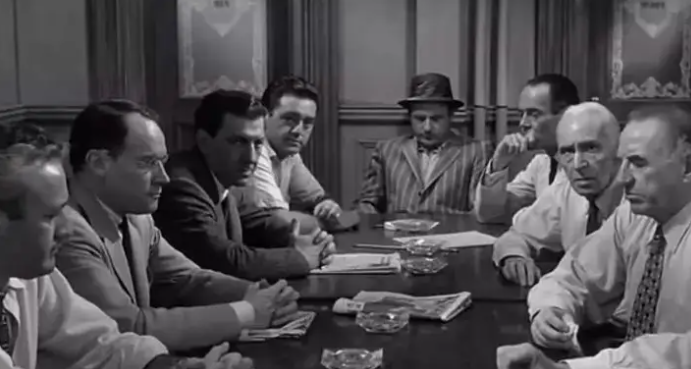
Sidney Lumet’s 12 Angry Men remains the gold standard for legal dramas, confined almost entirely to a single jury room. It explores the terrifying responsibility of twelve ordinary citizens tasked with deciding the fate of a young man accused of patricide. The film is a masterclass in the mechanics of the American justice system and the psychological barriers that threaten it.
The Concept of Reasonable Doubt
The cornerstone of the film is the legal principle of reasonable doubt. Initially, eleven jurors are ready to convict based on circumstantial evidence and a desire to return home. However, Juror 8, portrayed by Henry Fonda, stands alone not because he is certain of the defendant’s innocence, but because he recognizes that the evidence is not infallible. This section of the narrative emphasizes that the burden of proof lies with the prosecution, and if there is any “reasonable doubt,” the jury is legally and morally bound to acquit.
Overcoming Personal Prejudice in Justice
The jury room serves as a microcosm of society, filled with individuals carrying their own baggage. We see personal prejudice manifest in various forms:
- Juror 3: Projects his resentment toward his own son onto the defendant, seeking a conviction as a form of personal catharsis.
- Juror 10: Exhibits blatant bigotry, judging the defendant based on his socio-economic background and “those people” rhetoric.
- Juror 7: Represents apathy, prioritizing a baseball game over the life of a human being.
The film demonstrates that true justice requires the systematic deconstruction of these biases through logic, empathy, and persistent dialogue.
Leadership and the Power of One Voice
Juror 8’s leadership is not derived from authority, but from integrity and critical thinking. By asking “What if?”, he forces the other jurors to re-examine the testimony of the witnesses—the old man who claimed to hear the murder and the woman who claimed to see it through the windows of a passing train. His ability to maintain composure in the face of hostility highlights the importance of the individual’s conscience in a collective setting.

Oppenheimer: The Intersection of Scientific Brilliance and Ethical Burden
Christopher Nolan’s Oppenheimer shifts the focus from the jury room to the laboratory and the halls of political power. It chronicles the life of J. Robert Oppenheimer, the “father of the atomic bomb,” and the harrowing ethical landscape of the Manhattan Project.
The Manhattan Project and the Birth of the Atomic Age
The film meticulously details the scientific race against Nazi Germany. The creation of Los Alamos was a feat of unprecedented logistical and intellectual cooperation. However, the technical triumph of the Trinity Test is immediately overshadowed by the realization of what has been unleashed. The film portrays science not as a neutral pursuit, but as one inextricably linked to the survival—and potential destruction—of humanity.
The Promethean Struggle: Knowledge vs. Destruction
Oppenheimer is presented as a Promethean figure who gave humanity the fire of the sun, only to be consumed by the consequences. The “conscience” of the scientist is the central conflict. After the bombings of Hiroshima and Nagasaki, Oppenheimer famously quoted the Bhagavad Gita: “Now I am become Death, the destroyer of worlds.” This internal struggle highlights the gap between the theoretical beauty of physics and the brutal reality of its application in warfare.
Political Persecution and the Price of Conscience
The latter half of the film explores the 1954 security hearing, where Oppenheimer’s past associations and his opposition to the development of the Hydrogen Bomb led to his political downfall. This narrative thread exposes the ruthlessness of the McCarthy era and the way political entities weaponize personal history to silence dissenting scientific voices. The rivalry with Lewis Strauss serves as a cautionary tale about how ego and bureaucracy can stifle intellectual honesty.

Forrest Gump: A Historical Reflection Through the Lens of Innocence
While 12 Angry Men focuses on a single afternoon and Oppenheimer on a pivotal era of science, Forrest Gump spans decades of American history. It offers a unique perspective on the 20th century through the eyes of a man with a low IQ but an extraordinary heart.
Navigating Three Decades of American History
Forrest Gump’s life is a journey through the most transformative events of the United States. The film uses seamless visual effects to place Forrest in the company of historical figures and events:
- The Vietnam War: Highlighting the bravery and the tragic loss of soldiers like Bubba and the disillusionment of Lieutenant Dan.
- The Civil Rights Movement: Forrest’s presence at the University of Alabama during the stand in the schoolhouse door.
- The Watergate Scandal: A chance encounter that leads to the downfall of a presidency.
By placing a “simple” man at the center of these events, the film suggests that history is often made by those who are just “running” through it, unaware of their own significance.
The Philosophy of Resilience and Simple Wisdom
The famous line, “Life is like a box of chocolates, you never know what you’re gonna get,” encapsulates the film’s philosophy. Forrest’s success—as a football star, a war hero, a ping-pong champion, and a businessman—comes not from strategic planning, but from a steadfast commitment to his values and the people he loves. His resilience in the face of Jenny’s struggles and Lieutenant Dan’s bitterness provides a blueprint for emotional endurance.
The Interplay of Fate and Personal Agency
The recurring motif of the feather drifting in the wind asks a fundamental question: Are we all just floating around accidental-like on a breeze, or do we each have a destiny? Forrest Gump suggests it’s both. While we cannot control the historical winds that blow us, we can control how we treat others and how we respond to the “chocolates” we are dealt.

Comparative Analysis: Justice, Ethics, and Resilience in Modern Classics
When we synthesize these three films, we see a broader picture of human endeavor. Each film tackles a different facet of the “responsibility” we hold toward our fellow humans.
The following table compares the core thematic drivers of each film to illustrate their unique contributions to cinema and philosophy:
| Film Title | Primary Theme | Central Conflict | Societal Impact |
|---|---|---|---|
| 12 Angry Men | Justice & Logic | Individual Bias vs. Truth | Reinforces the sanctity of the jury system and “Reasonable Doubt.” |
| Oppenheimer | Ethics & Science | Innovation vs. Moral Consequence | Examines the burden of genius and the dangers of the nuclear age. |
| Forrest Gump | Resilience & History | Innocence vs. A Changing World | Provides a warm, humanistic lens on 20th-century American history. |
While 12 Angry Men teaches us how to think critically within a system, Oppenheimer warns us about the systems we create through our own brilliance. Meanwhile, Forrest Gump reminds us that regardless of the system or the era, the human capacity for love and perseverance remains our most valuable asset.
Frequently Asked Questions (FAQ)
- Q1: Why is “reasonable doubt” so important in 12 Angry Men?
- Reasonable doubt is the legal threshold that prevents innocent people from being wrongly convicted. In the film, it serves as the catalyst for Juror 8 to challenge the status quo, proving that even a “clear-cut” case can have hidden complexities that require careful deliberation.
- Q2: Did Oppenheimer really regret building the atomic bomb?
- The film and historical records suggest a complex sense of “technical guilt.” While he believed the project was necessary to end the war, he was deeply troubled by the subsequent arms race and the potential for global annihilation, leading him to advocate for international control of nuclear energy.
- Q3: What does the feather represent in Forrest Gump?
- The feather symbolizes the film’s theme of destiny versus chance. It suggests that while our lives may be shaped by external forces (the wind), there is a certain grace and purpose in how we land and the journey we take.
- Q4: How does 12 Angry Men address the issue of “prejudice”?
- The film addresses prejudice by showing how personal biases (against the poor, against youth, or based on personal trauma) can cloud a person’s judgment. It emphasizes that a fair trial is only possible when jurors are willing to acknowledge and set aside these biases.
- Q5: What is the significance of the “Prometheus” myth in Oppenheimer?
- Prometheus stole fire from the gods and gave it to man, for which he was eternally punished. Similarly, Oppenheimer gave humanity the power of nuclear fission—a “fire” that could power the world or destroy it—and suffered political and personal torment as a result.

Related Posts