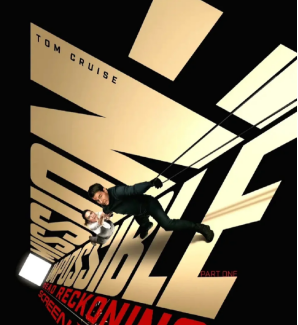
Since the first film was released in 1996, the series has continued to attract the attention of audiences around the world. For new audiences, choosing the right viewing order can help them better understand the plot; for old fans, revisiting the series can also lead to new discoveries. This article sorts out the viewing order of the “Mission Impossible” series and analyzes the highlights of each work.
Episode 1 – Mission Impossible (1996)

As the first film in the series, it is a milestone in the history of spy movies. The film tells the story of the CIA agent Ethan Hunt (Tom Cruise) whose team was ambushed while on a mission. All his teammates died and Ethan was framed as a traitor. In order to clear his name, he formed a new team, sneaked into the CIA headquarters to steal intelligence, and tried to find the real mastermind.
This film created the image of Ethan Hunt as a calm, resourceful and adventurous agent for the first time, while introducing the series’ iconic “Mission Impossible” concept and thrilling spy war elements.
It is worth mentioning that the film laid the core tone for the subsequent series, established a team model with Ethan as the core, and a plot structure of “mission execution – encounter crisis – Jedi counterattack”. In addition, the spy elements and suspenseful atmosphere in the film have had a profound impact on many subsequent spy-themed films.
Episode 2 – Mission: Impossible 2 (2000)

Mission: Impossible 2 further enhances the action scenes and visual effects based on the first film. The story revolves around Ethan Hunt’s attempt to stop the terrorist Sean Ambrose (Dougray Scott) from obtaining the deadly virus “Kimera”.
Compared to the first film, Mission: Impossible 2 focuses more on the presentation of action scenes and simplifies the spy plot. However, it is this change in style that makes it one of the most spectacular works in the series, and also provides a direction for the subsequent series to continuously break through in action design.
Episode 3 – Mission: Impossible 3 (2006)
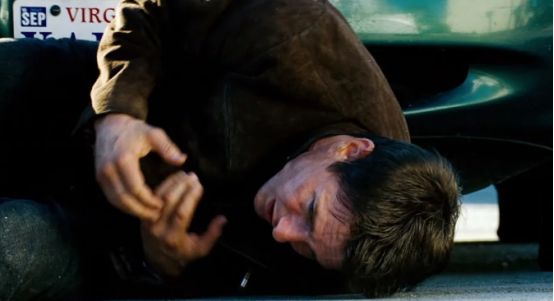
Mission: Impossible 3 brings new changes to the series, with the plot focusing more on emotional depth and character building. Ethan Hunt has retired and started his own family, but in order to rescue his fiancée who was kidnapped by the villain Owen Davian (Philip Seymour Hoffman), he has to come out of retirement and fight this extremely dangerous enemy with his team. Philip Seymour Hoffman’s outstanding performance makes Owen Davian one of the most oppressive villains in the series, and the battle of wits and psychological game between him and Ethan makes the plot full of tension.
While retaining the classic action scenes in the series, the film adds more emotional elements, showing Ethan’s soft side and making the character more three-dimensional. In addition, the “rabbit’s foot” prop setting in the movie adds a mysterious color to the story and also lays the groundwork for the expansion of the world view of the subsequent series.
Episode 4 – Mission: Impossible – Ghost Protocol (2011)
Mission: Impossible 4: Ghost Protocol takes the series to a new level. The story is set after Ethan Hunt’s “Impossible Mission Intelligence Agency” (IMF) was disbanded. They were framed as the mastermind of the bombing and were forced to act secretly in the form of “Ghost Protocol”. The goal is to prevent Russian radical Kurt Hendrix (Michael Nyquist) from launching a nuclear war.
The biggest highlight of this film is the extreme presentation of the big scenes, from Ethan climbing the world’s tallest building, the Burj Khalifa, to the thrilling chase in the Kremlin in Moscow, to the fierce gunfight in Mumbai, India. Each scene is well-made and the visual effects are stunning. At the same time, the film introduces a new character, Benji (Simon Pegg), whose humorous style brings a relaxed atmosphere to the tense plot and complements Ethan. In addition, the film clearly puts forward the concept of the “Syndicate” organization for the first time, constructing a larger villain system for the series and pushing the plot in a more grand direction.
Episode 5 – Mission: Impossible – Rogue Nation (2015)
Mission: Impossible 5: Rogue Nation continues the story of the previous film. Ethan Hunt discovers that the “Syndicate” organization really exists. It is an international criminal organization that fights against the IMF and is led by Solomon Lane (Sean Harris). Without official support, Ethan joins his old partner Benji and the new member Ilsa (Rebecca Ferguson) to try to destroy the “Syndicate” and stop its evil plan.
The film further deepens the worldview of the series. The addition of Ilsa adds more variables to the story. Her identity and complex background, both good and evil, create a subtle emotional connection with Ethan. In addition, the ending of the film reveals the connection between the “Syndicate” and the IMF’s top brass, leaving a huge suspense for the subsequent plot.
Episode 6 – Mission: Impossible – Fallout (2018)
Mission: Impossible 6: Fallout is the culmination of the series. The story continues from the previous film. Ethan Hunt encountered an accident while performing the task of recovering nuclear materials, causing some of the nuclear materials to fall into the hands of terrorists. In order to make up for his mistake, he and his team launched operations around the world, while also facing his old rival Solomon Lane and the newly emerged powerful villain August Walker (Henry Cavill).
The film brings together the most exciting action scenes in the series, from skydiving, racing on the streets of Paris, to climbing cliffs and chasing on rooftops. Each scene is textbook-level for action movies. At the same time, the film deeply explores the emotional lines of the characters, and the trust between Ethan and his teammates and the emotional entanglement with Ilsa are presented more delicately. In addition, the film echoes and summarizes the past plots of the series, making the storyline of the entire series more complete and leaving new development space for subsequent works.
Episode 7 – Mission: Impossible – Reckoning – Part 1 (2023)

This film opens a new chapter in the series. Ethan Hunt and his team face an unprecedented threat – “The Entity”, an artificial intelligence that can control global information and has self-awareness. Ethan must find the core of the “Entity” to prevent it from falling into the hands of those with bad intentions.
The film retains the classic elements of the series and introduces a new character, Grace (Hayley Atwell), whose interaction with Ethan is full of highlights. The action scenes remain at a high level, with fierce fighting on the roof of the train and thrilling chases in the desert, combined with the grand scene design, giving the audience an immersive viewing experience. As the first part of “Fatal Reckoning”, the end of the film leaves a huge suspense. The fate of Ethan and his team and the ultimate threat of the “Intelligence Body” will all be revealed in the second part.

Related Posts