The landscape of sports anime has undergone a profound transformation over the decades. What began as a genre focused on the raw, hot-blooded pursuit of “youthful passion” has expanded into a diverse medium exploring complex psychological landscapes, aesthetic beauty, and even the dark side of competitive egoism. By examining pillar titles like Slam Dunk, Free!, Kuroko’s Basketball, Ping Pong the Animation, and Blue Lock, we can trace the trajectory of how creators use sports as a canvas to paint the intricacies of the human condition.
The Foundation of Passion: Slam Dunk and the Realism of Youth
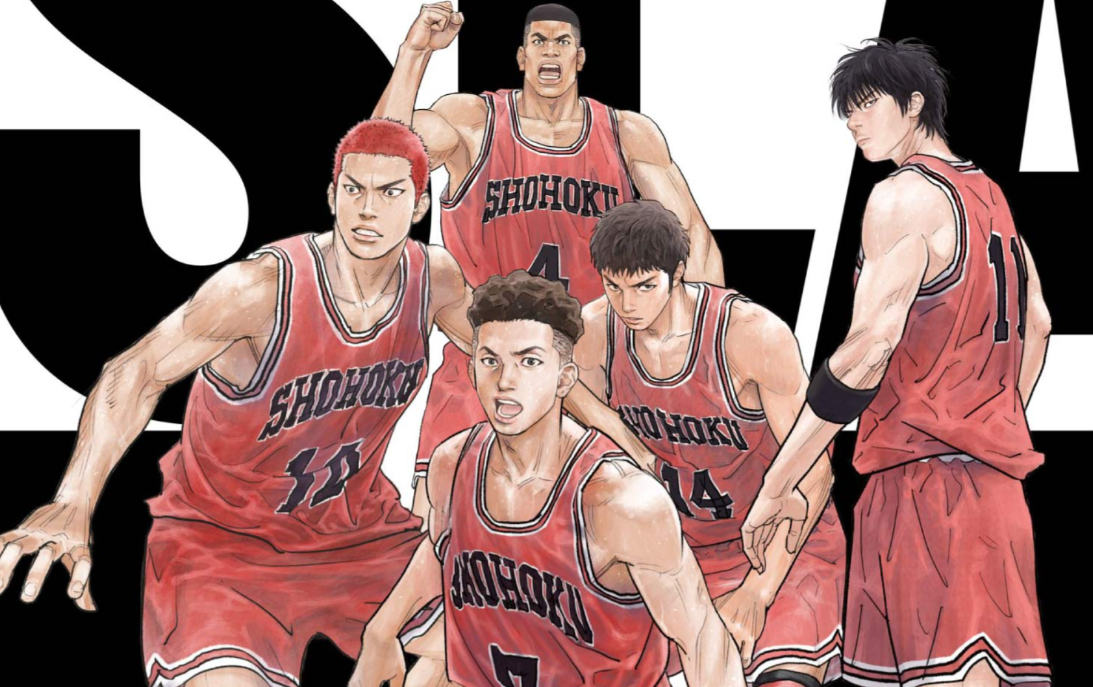
Slam Dunk remains the definitive gold standard for sports anime, not just for its basketball choreography, but for its uncompromising depiction of growth and failure. Unlike many modern interpretations that lean into supernatural abilities, Slam Dunk is rooted in the physical and emotional sweat of its characters. It tells the story of Hanamichi Sakuragi, a delinquent who enters the world of basketball to impress a girl, only to find a life-defining purpose within the court.
The Philosophy of “Giving Up Means the Game is Over”
One of the most iconic elements of Slam Dunk is the mentorship of Coach Anzai. His famous quote, “When you give up, that’s when the game is over,” serves as the thematic backbone of the series. This philosophy isn’t just about winning games; it’s about the internal resilience required to face overwhelming odds. The series captures the 1990s spirit of hard work (Doryoku) and friendship (Nakama), showing that even in defeat, there is a profound sense of accomplishment if one has given their all.
Technical Realism and Character Depth
The series is celebrated for its technical accuracy. Takehiko Inoue’s meticulous attention to basketball fundamentals—dribbling, rebounding, and defensive stances—provided a realistic blueprint that inspired a generation of real-world athletes. Furthermore, the character arcs of players like Mitsui Hisashi, who returns to the team after a period of delinquency, add layers of redemption and regret that resonate with viewers long after the final whistle.

The Aesthetic of Connection: Free! and the Iwatobi Swim Club
In contrast to the gritty realism of 90s basketball, Free! – Iwatobi Swim Club introduced a new dimension to sports anime: the intersection of visual aesthetics and deep emotional intimacy. Produced by Kyoto Animation, the series shifted the focus toward the “daily life” and “emotional bonds” of its protagonists, Haruka Nanase and his teammates.
Water as a Metaphor for Freedom
For Haruka, swimming is not merely a competitive endeavor; it is a sensory experience. The series uses high-fidelity animation to depict water as a living entity, representing Haruka’s desire for freedom and his detachment from conventional societal expectations. The “Free” in the title refers to Haruka’s preference for freestyle swimming, but it also symbolizes the characters’ search for their own identities outside of the rigid structures of competitive sports.
The Dynamics of Friendship and Rivalry
The core conflict between Haruka and Rin Matsuoka explores how different motivations can strain and eventually strengthen a bond. Rin’s obsession with professional success contrasts with Haruka’s desire to simply “feel the water.” Through their reconciliation, the series argues that the true value of sports lies in the shared experiences and the support system built within a team. The narrative emphasizes that competition should not come at the cost of one’s mental well-being or friendships.

Redefining the Genre: Kuroko’s Basketball and the Power of the Unseen
Kuroko’s Basketball (Kuroko no Basket) took the foundation laid by Slam Dunk and injected it with stylized, almost superhuman elements, creating a “battle manga” atmosphere within the confines of a basketball court. It moved the genre toward a more fast-paced, high-stakes spectacle that appealed to a global modern audience.
The Generation of Miracles and the Concept of the “Zone”
The series introduces the “Generation of Miracles,” five prodigies with nearly supernatural skills. This setup allows for a unique exploration of talent versus hard work. The introduction of the “Zone”—a state of total concentration—became a cultural phenomenon, effectively visualizing the psychological peak performance that athletes experience in real life.
| Character | Special Ability | Thematic Role |
|---|---|---|
| Tetsuya Kuroko | Misdirection / Invisibility | The “Shadow” supporting the light; emphasizes teamwork. |
| Taiga Kagami | Superhuman Jumping Power | The “Light”; represents the raw potential of the underdog. |
| Seijuro Akashi | Emperor Eye | The ultimate antagonist; represents the burden of absolute victory. |
The Philosophy of the “Shadow”
Kuroko himself is a subversion of the typical sports protagonist. He is physically weak and lacks individual scoring ability. His strength lies in his invisibility—his ability to facilitate others. This reinforces the theme that individual brilliance (like the Generation of Miracles) is ultimately inferior to the synergy of a team that trusts one another. It was a classic message delivered through a revolutionary, high-octane visual style.

Psychological Warfare: Ping Pong the Animation and the Conversation with Self
Directed by Masaaki Yuasa, Ping Pong the Animation is a masterclass in using sports as a medium for existential exploration. It moves away from the “winning is everything” trope to ask a more difficult question: Why do we play at all? The art style is intentionally distorted and avant-garde, mirroring the internal turmoil of the players.
Smile and Peco: Two Sides of Talent
The story follows two childhood friends, “Peco” (Hoshino) and “Smile” (Tsukimoto). Peco is the naturally gifted player who loses his way when faced with superior talent, while Smile is the “robot” who plays only to kill time, despite his immense potential. The series treats every match not as a physical battle, but as a “conversation with the self.” When characters play, they are confronting their fears, their loneliness, and their reasons for existence.
- Existential Realism: The show acknowledges that not everyone can be a hero. Some players are destined to be “average,” and the series finds beauty in that acceptance.
- Artistic Expression: The jagged, fluid animation style allows the “rhythm” of the ping pong ball to dictate the pacing of the emotional beats.
- The Hero Concept: Peco’s eventual realization that he must be the “hero” for Smile highlights the redemptive power of sports as a form of communication.

The Survivalist Shift: Blue Lock and the Rise of the Egoist
The most recent evolution in the genre is Blue Lock, which completely deconstructs the traditional “teamwork” ideology found in Slam Dunk and Kuroko’s Basketball. In Blue Lock, the team is a secondary tool; the individual “Ego” is the primary engine of success. Set in a high-tech prison-like facility, 300 strikers are forced to compete in a battle royale to become Japan’s ultimate forward.
Deconstructing the “Power of Friendship”
Blue Lock argues that Japanese soccer has failed because it prioritizes harmony over individual brilliance. The protagonist, Isagi Yoichi, must learn to be “selfish” to survive. This mirrors a shift in modern society toward hyper-competitiveness and the realization that in high-stakes environments, one must often prioritize their own growth to reach the pinnacle. It is “survival of the fittest” applied to soccer.
The Mechanism of “Chemical Reactions”
While the focus is on the individual, Blue Lock introduces the concept of “Chemical Reactions”—where two egoists use each other’s skills to create something neither could achieve alone. This isn’t teamwork based on friendship; it is a calculated partnership based on mutual benefit. The psychological pressure of the “Blue Lock” project forces characters to evolve at a breakneck pace, or face the end of their athletic careers forever.
Frequently Asked Questions (FAQ)
- Q1: Which sports anime is the most realistic for actual athletes?
- Slam Dunk is widely considered the most realistic due to its focus on fundamental skills, physical conditioning, and the emotional reality of loss. While Ping Pong the Animation is psychologically realistic, Slam Dunk provides the most accurate depiction of the sport’s mechanics and the grind of a high school season.
- Q2: How does Blue Lock differ from traditional sports anime?
- Traditional sports anime usually emphasize the “power of friendship” and teamwork. Blue Lock intentionally rejects these tropes, focusing instead on “egoism” and individual talent. It treats the sport more like a survival game or battle royale than a traditional club activity.
- Q3: Is Kuroko’s Basketball a good representation of real basketball?
- Kuroko’s Basketball is more of a “stylized” version of the sport. While it uses real terminology like “the Zone,” many of the players’ abilities (like full-court shots or invisibility) are exaggerated for dramatic effect. It is better viewed as a sports-themed action series.
- Q4: Why is Ping Pong the Animation’s art style so different?
- The art style, directed by Masaaki Yuasa, is designed to be expressive rather than “pretty.” It uses distorted perspectives and fluid lines to convey the intense psychological state of the players, making the emotional stakes feel more visceral and raw than standard anime art styles.
- Q5: What is the significance of the “Water” in the anime Free!?
- In Free!, water symbolizes freedom and the subconscious mind. For the main character Haruka, it is a place where he can be his true self without the pressure of competition. The animation of the water reflects the characters’ internal moods throughout the series.

Related Posts