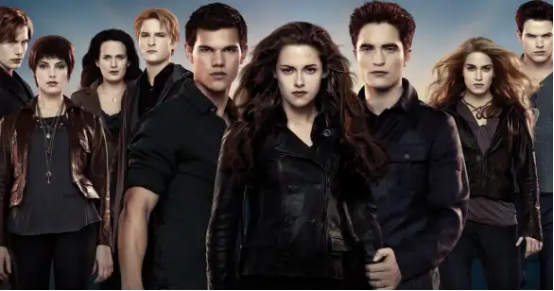
Since the publication of the novels in 2005, Stephenie Meyer’s Twilight series has rapidly become a global icon of youth culture. This fantastical tale of vampires, werewolves, love, and sacrifice has been transformed into a cinematic phenomenon in just a few years. While the film adaptations have often been criticized for their hollow plots and one-dimensional characters, they have nonetheless captured the hearts of countless young viewers, becoming a symbol of youth for a generation. The Twilight film series’s resounding popularity stems not only from its captivating love stories but also from its portrayal of the emotional complexity and extreme idealism of adolescence.
1. Heart-Stirring Love: The Ultimate Dream and Extreme Dependence
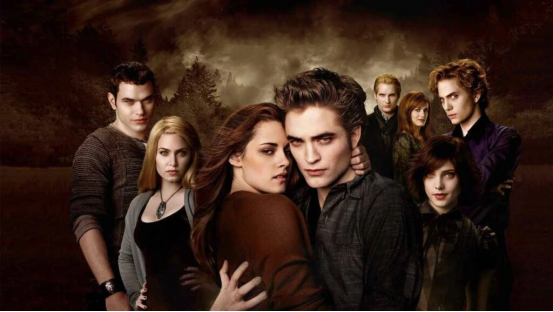
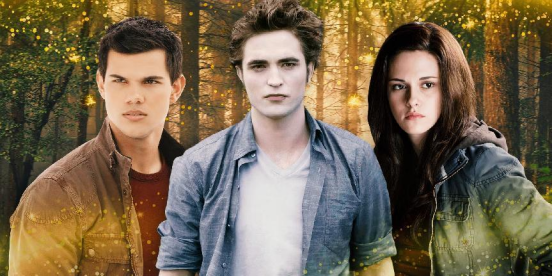
The core of “Twilight” is undoubtedly the forbidden and repressed love between Bella Swan (Kristen Stewart) and Edward Cullen (Robert Pattinson). It’s a love story of almost extreme proportions, with their relationship transcending the boundaries of life and death, transcending the definition of a typical romance. This setting has captivated countless audiences, especially those searching for passion and self-definition during adolescence.
However, as is often discussed, this relationship is highly idealistic, even somewhat unrealistic. Bella gives up nearly everything for Edward, including her life and independence, becoming completely dependent on him. This “giving up everything for love” plot is romantically appealing, but realistically, it’s quite unhealthy. Edward is the archetypal “perfect boyfriend”: handsome, mysterious, mature, and intelligent, but also extremely protective, often trapping Bella in her own fears and dependence.
This is particularly evident in New Moon. When Edward leaves Bella to protect her, she nearly collapses into a mental breakdown. She sinks into deep despair, even resorting to extreme actions such as climbing to a height in an attempt to “seek death,” seemingly an extreme expression of her belief that “I can’t live without Edward.” While this reliance on love creates emotional tension in the film, it also raises questions about its overly idealistic values.
2. Character Creation: Simplification and Lack of Depth
While the film’s core is romance, its characterizations often appear one-dimensional, lacking sufficient depth and development. Bella, while portrayed as the protagonist, possesses deeply “feminine” traits, but her personality development is relatively flat. Bella is often criticized as a “hollow” character, lacking many independent motivations and goals, with almost all of her actions revolving around Edward. Although her later decision to become a vampire seems to offer some freedom of self-selection, she remains emotionally dependent on Edward. She experiences little of the complex process of self-awakening, with all her emotional fluctuations being directly tied to Edward. This makes Bella’s character appear rather one-dimensional.
The character of Edward is the archetypal “perfect lover,” with few flaws. While his protectiveness towards Bella gradually reveals a somewhat selfish side in “Eclipse” and “Breaking Dawn,” overall, he never undergoes a significant character transformation. In contrast to Bella’s dependence, Edward lacks inner struggle and self-reflection, remaining a character with a “halo,” which feels unreal.
In contrast, Jacob Black (Taylor Lautner) appears more three-dimensional. In “New Moon,” Jacob’s transformation from friend to emotional support for Bella, and his subsequent conflict with vampires, gradually deepens his character. His role undoubtedly reflects the adolescent struggles of love, friendship, and family responsibilities, making him one of the most “human” characters in the story. Although he ultimately loses to Edward, Jacob demonstrates greater growth, demonstrating a greater degree of human complexity and independence.
3. Overly dramatic plot: the conflict between reality and fantasy
The series’ plots often hinge on extremes and dramatic conflict. The rivalry between vampires and werewolves, the emotional entanglement between Bella and Edward, and even Bella’s transformation from human to vampire are all highly conflicting plot devices. However, these settings fail to delve deeply into the characters’ inner transformation and growth, instead relying on superficial conflicts to propel the story forward.
For example, the conflict between the newly born vampire army and the werewolves in “Eclipse” doesn’t offer much philosophical reflection, but rather relies on conflict to draw the audience in. In “Breaking Dawn,” after Bella becomes a vampire, there’s a visually striking battle scene, but the overall plot drags on, and the tension isn’t effectively conveyed, instead feeling somewhat drawn out and monotonous.
These overly dramatic conflicts and settings often cause the film’s core love plot to be overwhelmed by “external conflicts”, and this setting to a certain extent weakens the audience’s sense of emotional substitution for the characters, turning the film from a delicate love story into a visually gorgeous fantasy adventure.
4. Music and visual effects: perfect atmosphere
While the film itself has significant flaws in its plot and characters, it does a remarkable job with its music and visuals. The soundtrack, particularly tracks by rock bands like My Chemical Romance and Paramore, successfully captures the passion and conflict between Bella and Edward through music. Songs like “Decode” and “Supermassive Black Hole” have become classics for fans, with many closely associating them with the film’s emotional atmosphere.
In terms of visual effects, especially in the showdown between vampires and werewolves, the special effects production is relatively outstanding. Whether it is Edward’s swift running scene or the werewolf’s transformation stunt, the overall visual impact is extremely strong, which undoubtedly enhances the film’s viewing experience and makes it a place in the field of supernatural films.
5. Conclusion: Youthful Choices and Lost
The Twilight series isn’t just a love story between vampires and humans; it’s a microcosm of adolescent emotions. Through Bella’s choices, the film reveals the extreme desire and idealistic pursuit of love in adolescence, while also revealing the dependence and loss that can arise from such pursuits. Whether it’s Bella’s “life and death for love” or Edward’s “perfect protection,” both represent a fantasy of perfect love—a fantasy that’s both thrilling and fraught with danger.
Although the film’s plot is somewhat hollow in some aspects and the characterization is not profound enough, it still captures the typical emotions of adolescence – the extreme desire for love and the confusion of independence. Its charm lies in the fact that it showcases such an extreme emotional experience and presents it all through gorgeous visuals and music, becoming a cultural symbol of an era.

Related Posts