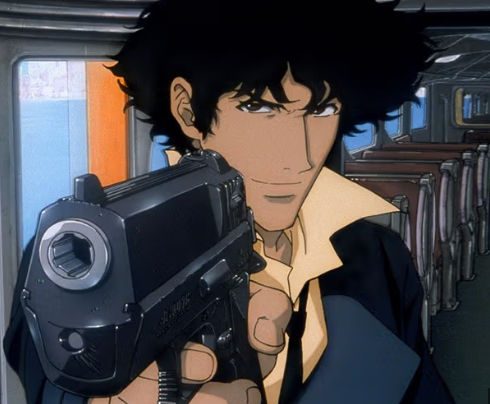
The Cosmic Canvas of Cowboy Bebop: Freedom versus Loneliness
When analyzing the thematic depth of late 90s animation, Cowboy Bebop stands as a monumental achievement that transcends its sci-fi noir trappings. At its core, the series is a profound exploration of the dichotomy between absolute freedom and crushing loneliness. The vastness of space serves as a literal and metaphorical vacuum where the characters attempt to outrun their pasts, only to find that true liberation is an illusion when one is shackled by unresolved trauma.
The Philosophy of the Bounty Hunter
Spike Spiegel and the crew of the Bebop live on the fringes of a hyper-capitalist solar system. Their lifestyle as bounty hunters appears to be the ultimate expression of autonomy—no bosses, no fixed schedules, and the entire galaxy to roam. However, this freedom comes at a severe psychological cost. The narrative meticulously deconstructs the romanticized vision of the lone wanderer, revealing a group of deeply fractured individuals who use their nomadic existence as a coping mechanism.
- The Burden of the Past: Every major character is tethered to a history they cannot escape. Spike is bound to the Syndicate and Julia, Jet is haunted by his days as an ISSP officer, and Faye is literally a woman out of time, burdened by amnesia and crippling debt.
- Existential Drift: The episodic nature of the show mirrors the characters’ aimless wandering. They are not moving toward a grand destiny; they are merely surviving day to day, highlighting the existential dread of a life without inherent meaning.
- Music as Emotional Subtext: Yoko Kanno’s legendary jazz and blues score is not just background noise; it is the emotional heartbeat of the series. The improvisational nature of jazz reflects the unpredictability of their lives, while the blues underscores their perpetual sorrow.
Through its masterful storytelling, Cowboy Bebop argues that true freedom cannot be achieved through physical escape. It requires the terrifying vulnerability of facing one’s history and forming genuine, lasting connections—something the Bebop crew tragically realizes only when it is too late.

Nurturing Growth in Assassination Classroom: Unconventional Wisdom
On the surface, Assassination Classroom presents a bizarre and darkly comedic premise: a class of marginalized students is tasked with murdering their alien-like, moon-destroying teacher before graduation. Yet, beneath this absurd exterior lies one of the most poignant and insightful explorations of pedagogy, adolescent psychology, and the transformative power of genuine mentorship.
Koro-sensei’s Pedagogical Masterclass
Class 3-E is the dumping ground of Kunugigaoka Junior High School, a place designed to break the spirits of underachievers to motivate the academic elite. Koro-sensei subverts this toxic educational hierarchy by turning the act of assassination into a vehicle for personal empowerment. He recognizes that traditional education often fails because it treats students as monolithic data points rather than complex individuals.
- Failure as a Stepping Stone: In the context of assassination, failure is constant. Koro-sensei uses these repeated failures not to demean his students, but to teach them resilience, critical thinking, and the value of iterative improvement.
- Tailored Mentorship: With his Mach 20 speed, Koro-sensei provides hyper-individualized attention. He identifies the unique strengths of every student—whether it’s Chiba’s spatial awareness or Karma’s tactical brilliance—and nurtures those traits to build their self-worth.
- The Paradox of the Target: The ultimate tragedy and beauty of the series lie in the bond formed between the assassins and their target. The students must destroy the very being who gave them life purpose, teaching them a brutal but necessary lesson about the inevitability of loss and moving forward.
Assassination Classroom ultimately serves as a scathing critique of rigid, high-pressure educational systems. It posits that true wisdom and growth are cultivated in environments where students feel seen, valued, and safe enough to fail.

Decoding Neon Genesis Evangelion: Trauma and Existentialism
Few anime have generated as much discourse, confusion, and academic analysis as Hideaki Anno’s Neon Genesis Evangelion. Often initially perceived as a standard mecha action series, it rapidly devolves into a harrowing psychological thriller that dissects clinical depression, the Hedgehog’s Dilemma, and the agonizing difficulty of human connection.
The Hedgehog’s Dilemma in Mecha Form
The core of Evangelion is not the battle between humanity and the Angels, but the internal war waged within the protagonist, Shinji Ikari. The concept of the “Hedgehog’s Dilemma”—the idea that human beings crave intimacy but inevitably hurt each other when they get too close—is woven into the very fabric of the show’s lore. The AT Fields (Absolute Terror Fields) that protect the Angels and the Evangelions are explicitly revealed to be the physical manifestation of the psychological walls that separate individual human souls.
- Deconstruction of the Hero: Shinji is a radical departure from traditional anime protagonists. He is not brave; he is traumatized, deeply insecure, and motivated primarily by a desperate need for validation from his abusive father, Gendo.
- The Illusion of Escapism: The series actively punishes the audience for seeking escapist power fantasies. The act of piloting the Eva is shown to be a horrific, psychologically damaging ordeal, forcing viewers to confront the reality of child soldiers and trauma.
- The Human Instrumentality Project: The confusing, highly abstract climax of the series revolves around the forced merging of all human consciousness. It asks a terrifying philosophical question: Is it better to exist as an individual with pain and loneliness, or to merge into a painless, collective nothingness?
Evangelion’s iconic scenes—from the silent elevator ride to the surreal, psychoanalytical final episodes—are deliberate attempts to break down the barrier between the medium and the viewer. It is a masterpiece that demands intense emotional labor to decode, ultimately delivering a message of radical self-acceptance.

Gambling Apocalypse Kaiji: High-Stakes Tests of Human Nature
While many anime explore the power of friendship and optimism, Gambling Apocalypse Kaiji takes a sledgehammer to these concepts, exposing the raw, ugly, and desperate facets of human nature under extreme pressure. It is a masterclass in psychological tension, using the framework of underground gambling to critique predatory capitalism and the illusion of meritocracy.
The Psychology of the Desperate Gambler
Kaiji Ito is not a genius strategist; he is a chronic slacker who is pushed to the absolute brink by crushing debt. The games he plays—such as Restricted Rock-Paper-Scissors or the terrifying Steel Beam Crossing—are designed to strip away societal niceties and reveal the primal instinct for self-preservation. The series meticulously details the internal monologues, the sweat, and the sheer terror of betting one’s life or limbs on a single decision.
- Systemic Oppression: The antagonistic Teiai Corporation represents the ruthless upper echelon of society. They view the debtors as literal human trash, using their desperation for sadistic entertainment. The games are rigged not just mechanically, but psychologically, designed to make the poor turn on each other.
- The Betrayal Inevitability: Kaiji repeatedly places his faith in others, only to be brutally betrayed when the stakes get too high. The series explores how morality becomes a luxury that the desperate simply cannot afford.
- The Flaws of the Protagonist: Kaiji’s greatest tragedy is his cyclical nature. He is capable of incredible, superhuman focus when his life is on the line, but once safe, he immediately reverts to his lazy, gullible habits, trapping himself in a perpetual cycle of debt and suffering.
Through its agonizingly slow pacing and intense psychological breakdowns, Kaiji serves as a terrifying mirror to modern economic anxieties. It proves that the most dangerous monsters are not aliens or demons, but human greed and systemic exploitation.

Re:Zero and the Agony of Reincarnation: Bending World Rules
The “Isekai” (another world) genre is heavily saturated with power fantasies where an ordinary protagonist is gifted immense strength and a harem of admirers. Re:Zero – Starting Life in Another World completely subverts this trope by introducing a mechanic that turns the fantasy into a psychological horror: “Return by Death.”
Return by Death as Psychological Torture
Natsuki Subaru is transported to a fantasy world with no special abilities, no combat prowess, and no innate magical talent. His only power is the ability to rewind time to a specific “save point” whenever he dies. What initially sounds like a gamer’s ultimate advantage is quickly revealed to be a mechanism of unimaginable torture.
- The Isolation of Trauma: Because time resets, Subaru is the only person who remembers the horrific events, the betrayals, and the brutal deaths of himself and his loved ones. He cannot share his trauma with anyone, leading to profound psychological isolation and several mental breakdowns.
- Deconstructing Entitlement: In the early arcs, Subaru exhibits toxic traits typical of isekai protagonists—he believes he is the “main character” and is entitled to the love of the heroine, Emilia, simply because he suffers for her. The narrative brutally punishes this mindset, forcing Subaru to realize his own insignificance and flaws.
- The Evolution of Agency: Over time, the series shifts from a story of suffering to one of immense personal growth. Subaru learns to rely on others, to communicate effectively, and to use his knowledge of alternate timelines to manipulate the world’s rules, transforming from a helpless victim into a genuine, albeit deeply scarred, hero.
Re:Zero forces the audience to confront the reality of infinite retries. It asks the viewer to consider the immense mental fortitude required to face certain, painful death repeatedly just to ensure the happiness of others, making it a profound exploration of sacrifice and resilience.

The Intersection of Trauma and Triumph in Anime
When we synthesize the thematic cores of Cowboy Bebop, Assassination Classroom, Evangelion, Kaiji, and Re:Zero, a unified narrative emerges. Despite their vastly different genres—sci-fi, school comedy, mecha, gambling, and isekai—they all utilize their unique settings to isolate the human condition and subject it to extreme stress tests.
How Anime Explores the Human Condition
These anime masterpieces succeed because they refuse to offer simple solutions to complex psychological problems. They understand that true character development requires a crucible of trauma, failure, and agonizing self-reflection. To better understand how these shows intersect, we can examine their core philosophies side-by-side.
| Anime Series | Core Philosophical Theme | Primary Conflict | The Protagonist’s Burden |
|---|---|---|---|
| Cowboy Bebop | Existentialism & Freedom | Outrunning the Past | Inability to form lasting connections due to unresolved trauma. |
| Assassination Classroom | Pedagogy & Self-Actualization | Systemic Marginalization | The moral paradox of destroying the source of one’s growth. |
| Neon Genesis Evangelion | The Hedgehog’s Dilemma | Fear of Intimacy vs. Isolation | Crippling self-hatred and the terror of being perceived by others. |
| Gambling Apocalypse Kaiji | Capitalist Critique & Survival | Greed vs. Morality | Maintaining humanity in a system designed to strip it away. |
| Re:Zero | Trauma, Resilience & Choice | The Agony of Infinite Retries | Bearing the memories of death and suffering in absolute isolation. |
By placing characters in impossible situations, these creators bypass standard narrative conventions to speak directly to the viewer’s deepest anxieties. Whether it is the fear of failure, the dread of loneliness, or the crushing weight of societal expectations, these series provide a cathartic lens through which we can examine our own struggles.

Why Psychological Anime Resonates with Global Audiences
The global phenomenon of anime is often attributed to its stunning animation and unique cultural aesthetics. However, the enduring legacy of the specific masterpieces discussed in this guide lies in their unflinching commitment to psychological realism. They do not merely entertain; they provoke, disturb, and ultimately heal.
Escapism vs. Confrontation
While much of modern media is designed as pure escapism, psychological anime operates on the principle of confrontation. Viewers are drawn to Shinji’s depression, Kaiji’s desperation, and Subaru’s agony because they reflect the unspoken, darker realities of the human experience. By watching these characters navigate their shattered psyches and hostile worlds, audiences are granted a safe space to process their own emotions, proving that animation is one of the most powerful mediums for philosophical exploration ever created.
Frequently Asked Questions (FAQ)
- What makes an anime “psychological”?
- A psychological anime focuses heavily on the internal mental states, moral dilemmas, and emotional instability of its characters rather than just external action. It often explores themes of trauma, existentialism, identity, and the darker aspects of human nature, challenging the viewer to think critically about the characters’ motivations.
- Why is Neon Genesis Evangelion considered a turning point in anime history?
- Evangelion is considered a watershed moment because it actively deconstructed the popular mecha genre. Instead of a heroic narrative, it offered a deeply personal, avant-garde exploration of the creator’s clinical depression. Its use of religious symbolism, psychoanalytic theory, and unconventional narrative structures changed the industry’s approach to adult-oriented storytelling.
- How does Re:Zero subvert the traditional Isekai genre?
- Traditional Isekai anime often feature overpowered protagonists who easily conquer their new environments. Re:Zero subverts this by making the protagonist incredibly weak and subjecting him to realistic psychological trauma. His only power, “Return by Death,” forces him to experience gruesome deaths repeatedly, shifting the focus from power fantasy to a grueling test of mental endurance and character growth.
- Is the ending of Cowboy Bebop meant to be pessimistic?
- While the ending is undeniably tragic, it is not strictly pessimistic. It represents Spike Spiegel finally taking ownership of his destiny and confronting his past rather than continuing to run from it. The conclusion is a bittersweet realization of his arc, emphasizing that finding resolution, even at the ultimate cost, is a necessary part of the human experience.
- What real-world critiques are embedded in Gambling Apocalypse Kaiji?
- Kaiji serves as a harsh critique of modern hyper-capitalism, predatory lending, and the illusion of a meritocratic society. It exposes how the wealthy and powerful manipulate systems to keep the lower classes desperate, turning their survival instincts into a spectacle. The series highlights the fragility of human morality when basic survival is threatened by insurmountable debt.

Related Posts