Certain love stories transcend the screen, embedding themselves into our cultural consciousness and defining our understanding of romance, connection, and sacrifice. These are not just tales of affection; they are profound explorations of the human condition, set against extraordinary circumstances. By examining seminal works like Richard Linklater’s “Before” trilogy, James Cameron’s “Titanic,” and Michael Curtiz’s “Casablanca,” we can dissect the architectural components of what makes a cinematic love story truly timeless. These films, while vastly different in style and scope, all masterfully use their unique settings and narrative conflicts to amplify the emotional core of their central relationships, creating powerful and enduring legacies.
This guide will delve deep into the thematic structures of these iconic films. We will explore how the “Before” trilogy uses dialogue and the passage of time to map the entire lifecycle of a relationship, how “Titanic” leverages historical disaster and class struggle to forge an unforgettable epic romance, and how “Casablanca” presents the ultimate conflict between personal love and moral duty. Through this analysis, we will uncover the shared principles and distinct techniques that make these stories resonate so powerfully, decades after their release.
The Before Trilogy: A Journey Through Time and Connection
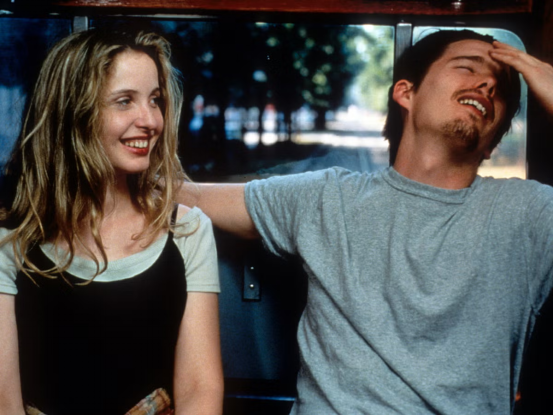
Richard Linklater’s “Before” trilogy stands as a unique monument in cinematic history, chronicling the relationship between Jesse (Ethan Hawke) and Céline (Julie Delpy) over nearly two decades. Its power lies not in grand gestures or dramatic plot twists, but in its unwavering commitment to authentic, intelligent, and deeply human conversation. The trilogy is a masterclass in using dialogue as the primary vehicle for action, character development, and thematic exploration.
From Serendipity to Shared History
The trilogy’s structure allows the audience to witness the complete arc of a modern relationship, from its idealistic inception to its complicated reality. Each film serves as a distinct chapter with a unique emotional texture:
- Before Sunrise (1995): This film captures the intoxicating magic of a chance encounter. Two strangers meet on a train and spend a single, unforgettable night in Vienna. The dialogue is philosophical, romantic, and filled with the limitless potential of new love. It explores the concept of an instantaneous soul connection, where two people feel they have known each other for a lifetime in just a few hours.
- Before Sunset (2004): Nine years later, the tone shifts to one of melancholy, regret, and rekindled hope. Meeting again in Paris, Jesse and Céline confront the “what ifs” that have haunted them. The conversation is more urgent, tinged with the weight of their separate lives and the pain of their missed connection. It examines how memory and idealization clash with the reality of time’s passage.
- Before Midnight (2013): Another nine years pass, and we find Jesse and Céline as a long-term couple facing the mundane and profound challenges of partnership and parenthood. The film’s centerpiece is a raw, painful, and ultimately cathartic argument in a hotel room. This installment fearlessly dissects the hard work of maintaining love after the initial romance has faded, proving that true connection is not just about finding the right person, but about actively choosing to stay together through friction and imperfection.
The Philosophy of Connection Through Conversation
Unlike other romances, the “action” in the “Before” trilogy is almost entirely verbal. The characters’ walks through Vienna, Paris, and the Greek Peloponnese are merely backdrops for their intellectual and emotional sparring. They discuss life, death, love, feminism, and their deepest insecurities. This focus on dialogue elevates their bond beyond simple attraction; it is a meeting of minds and souls. The realism of their conversations—overlapping, meandering, and full of personal revelations—makes their relationship one of the most believable ever portrayed on film.

Titanic: Epic Romance Forged in Disaster
James Cameron’s “Titanic” is the antithesis of the “Before” trilogy’s subtlety. It is a grand, sweeping epic that weaves a fictional love story into the very real and tragic history of the RMS Titanic’s maiden voyage. The film’s immense success and enduring appeal stem from its ability to pair a universally understood romance with the high stakes of a life-or-death disaster, creating an unforgettable emotional experience.
Love Across a Chasm of Social Class
At its core, “Titanic” is a story about the collision of two worlds, embodied by its protagonists. Rose DeWitt Bukater (Kate Winslet) is a member of the suffocating upper class, engaged to a wealthy but cruel man, Cal Hockley. Jack Dawson (Leonardo DiCaprio) is a penniless, third-class artist who won his ticket in a poker game. Their love is an act of rebellion against the rigid social hierarchy of the Edwardian era. Jack doesn’t just offer Rose romance; he offers her freedom and a glimpse of an authentic life she craves. He encourages her to break free from societal expectations, symbolized in iconic scenes like the “flying” moment at the ship’s bow and his teaching her to spit “like a man.” Their relationship is powerful because it represents the transcendence of love over artificial social barriers.
The Impending Doom as a Narrative Catalyst
The historical certainty of the ship’s sinking provides the narrative with an overwhelming sense of urgency and poignancy. Every moment Jack and Rose share is precious because the audience knows it is fleeting. The disaster serves several key functions:
- It raises the stakes: Their love story is not just about whether they will end up together, but whether they will survive.
- It reveals true character: The chaos of the sinking exposes Cal’s cowardice and cruelty, while highlighting Jack’s selflessness and bravery.
- It immortalizes their love: Jack’s ultimate sacrifice—freezing to death in the Atlantic so that Rose may live—elevates their brief romance into a legendary tale of devotion. His famous line, “You must do me this honor… promise me you’ll survive,” ensures their love is not defined by its tragic end, but by its life-affirming power.

Casablanca: A Timeless Tale of Love and Noble Sacrifice
“Casablanca” is a masterwork of romantic drama, set against the desperate backdrop of World War II. Its story of love, loss, and moral choice has captivated audiences for over 80 years. The film’s central conflict revolves around Rick Blaine (Humphrey Bogart), a cynical American expatriate who must choose between his personal happiness with the woman he loves, Ilsa Lund (Ingrid Bergman), and the greater good of the Allied cause.
The Weight of a Shared Past
The emotional core of “Casablanca” is built on the foundation of a shared, idealized past. Rick and Ilsa’s whirlwind romance in Paris, shown in flashback, represents a time of pure happiness before the war tore them apart. The sudden reappearance of Ilsa in his Casablanca nightclub forces Rick to confront the bitterness and heartbreak he has been nursing for years. The song “As Time Goes By” becomes a powerful motif, a painful and beautiful reminder of what they once had. This tension between a perfect past and a complicated present is what drives the film’s emotional narrative.
The Ultimate Moral Dilemma: Love vs. Duty
Unlike many love stories, the central conflict in “Casablanca” is not about whether two people love each other—their deep affection is never in doubt. The conflict is external and ethical. Ilsa is now married to Victor Laszlo, a celebrated Czech Resistance leader who needs to escape Casablanca to continue his vital work against the Nazis. Rick possesses the letters of transit that can guarantee their safe passage. He faces an impossible choice: use the letters to escape with Ilsa and reclaim his personal happiness, or sacrifice his love for her so that she and Laszlo can continue the fight for freedom. This elevates the story from a simple romance to a profound meditation on morality and idealism.
The Nobility of Renunciation
The film’s iconic ending, in which Rick orchestrates Ilsa and Laszlo’s escape, is what cements its status as a classic. His decision to renounce his own desires for a cause “bigger than three little people” is the ultimate act of love. He understands that Ilsa’s place is with Laszlo, supporting the war effort. His famous line, “We’ll always have Paris,” is not a statement of defeat, but a mature acknowledgment that the value of their love lies in its memory, not its possession. This act of noble sacrifice is arguably more romantic and enduring than a conventional “happily ever after” ending would have been.

The Element of Time as a Narrative Force
Across these three distinct cinematic worlds, the concept of time is a powerful, active force that shapes the narrative and defines the nature of each romance. Whether it’s a ticking clock or the vast expanse of decades, time is never a passive backdrop; it is a central character that tests, defines, and immortalizes the love stories.
Constrained Time vs. Expansive Time
In both “Titanic” and “Before Sunrise,” the romance is compressed into a very short, intense period. For Jack and Rose, their entire relationship unfolds over a few days, its intensity magnified by the knowledge that their time is limited by the ship’s journey and, ultimately, its tragic fate. Similarly, Jesse and Céline have only one night in Vienna, a constraint that forces a level of honesty and vulnerability that might take years to develop otherwise. This use of constrained time creates a sense of urgency and magic, suggesting that a profound connection can be forged in an instant.
Conversely, the “Before” trilogy as a whole utilizes expansive time, exploring how love evolves and endures over eighteen years. This long-form approach allows for a deep examination of how initial passion transforms into a complex, resilient partnership, weathered by the realities of life. Time is not the enemy but the canvas on which their entire relationship is painted.

External Conflict as a Romantic Obstacle
Timeless love stories often derive their power from the formidable obstacles the lovers must overcome. In “Titanic” and “Casablanca,” these obstacles are powerful external forces that reflect broader societal and historical conflicts, making the personal stakes feel universally significant.
Class Warfare on the High Seas
The primary obstacle in “Titanic” is the rigid class structure of the Edwardian era. The physical separation of decks on the ship is a potent metaphor for the social chasm between Rose and Jack. Her family and fiancé, Cal, view Jack not as a person but as an inferior specimen, a “gutter rat.” Their struggle is not just to be together, but to defy a world that is designed to keep them apart. Every stolen moment in the boiler room or on the third-class deck is an act of social rebellion. The sinking of the ship, in a grimly ironic way, becomes the ultimate equalizer, rendering class distinctions meaningless in the face of death.
Love in a Time of War
In “Casablanca,” the obstacle is the all-encompassing reality of World War II. The city of Casablanca itself is a purgatory for refugees, a place of transit and desperation. The threat of the Nazi regime is ever-present, and every character’s decision is weighed against the backdrop of this global conflict. Rick and Ilsa’s personal desires are constantly clashing with their moral obligations to the war effort. Their love story is powerful because it is inextricably linked to one of the most significant events in modern history, forcing them to confront questions of duty, patriotism, and the role of the individual in a world crisis.

The Enduring Legacy of Cinematic Romance
The “Before” trilogy, “Titanic,” and “Casablanca” have left an indelible mark on filmmaking and popular culture, but their influence extends beyond mere box office success or critical acclaim. They have fundamentally shaped audience expectations of what a love story can be, demonstrating that the genre can accommodate everything from quiet, philosophical realism to grand, historical epics.
Defining Modern and Classic Romance
“Casablanca” and “Titanic” represent the pinnacle of classic, high-stakes romantic drama. They established a template where love is tested by insurmountable external forces, often leading to tragic or bittersweet conclusions that emphasize sacrifice and honor. Their legacy is seen in countless films that use historical events or life-threatening situations to amplify romantic tension.
The “Before” trilogy, on the other hand, pioneered a more naturalistic, dialogue-driven approach to romance. Its influence is evident in the indie film scene and in stories that prioritize emotional and intellectual intimacy over plot-driven drama. It proved that a compelling narrative could be built entirely on the chemistry and conversation between two characters, inspiring a generation of filmmakers to find the epic in the everyday.
Together, these films demonstrate the incredible versatility of the romance genre. They teach us that a love story’s power comes from its truthfulness, whether that truth is found in a noble sacrifice on a foggy runway, a selfless promise in freezing waters, or a difficult, honest conversation between two people who have built a life together.
Frequently Asked Questions (FAQ)
- Why is Casablanca considered a great romance even though the main characters don’t end up together?
- Its greatness lies in its mature portrayal of love as something other than possession. Rick’s decision to sacrifice his own happiness for Ilsa’s safety and the greater good of the war effort is seen as the ultimate romantic gesture. The film argues that the most profound love is selfless, and the nobility of his choice makes their bond more powerful and memorable than a conventional happy ending.
- What makes the dialogue in the “Before” trilogy so compelling?
- The dialogue feels authentic and unscripted, mirroring real-life conversations that are often philosophical, witty, and deeply personal. Writers Richard Linklater, Ethan Hawke, and Julie Delpy crafted conversations that reveal character and advance the plot organically. The characters talk over each other, go on tangents, and express vulnerability, making the audience feel like they are eavesdropping on a genuine, evolving relationship.
- How does the historical setting of Titanic enhance its love story?
- The historical setting provides a rigid social structure for Jack and Rose to rebel against, making their love a symbol of freedom. More importantly, the impending and historically accurate disaster of the sinking creates immense tension and raises the stakes from personal heartbreak to life and death. This backdrop of tragedy makes their brief time together feel incredibly precious and immortalizes Jack’s sacrifice.
- Are there common elements that all timeless movie love stories share?
- Yes, several common elements are often present. They typically feature highly relatable characters with strong chemistry, significant obstacles (whether internal or external) that test their bond, high emotional stakes, and a resolution that feels earned and emotionally resonant, even if it’s not a traditionally “happy” one. Ultimately, they tap into universal human desires for connection, understanding, and meaning.
- How do these films explore the concept of a “soulmate”?
- Each film presents a different facet of the “soulmate” concept. “Before Sunrise” portrays it as an instant, profound intellectual and emotional connection—a meeting of two minds that feel destined. “Titanic” depicts it as a passionate, transformative love that frees a person to become their true self. “Casablanca” suggests a soulmate can be a person from your past whose connection is so deep it forces you to make monumental moral choices, even if you cannot be with them.

Related Posts