In the brutal, demon-infested world of Demon Slayer (Kimetsu no Yaiba), the path of a warrior is paved with loss, pain, and sacrifice. While every member of the Demon Slayer Corps carries their own burdens, some characters stand out for their profound transformations, rising from the ashes of deeply traumatic pasts to become beacons of hope and power. Their stories are not merely about survival; they are about the incredible resilience of the human spirit. This comprehensive guide explores the transformative journeys of four such heroes—Kanao Tsuyuri, Zenitsu Agatsuma, Inosuke Hashibira, and Obanai Iguro—examining how their origins of despair were the very foundation upon which their heroic legacies were built.
These characters demonstrate that true strength is not the absence of fear or pain, but the courage to act in spite of it. From an emotionally vacant child and a self-proclaimed coward to a wild boy raised by boars and a Hashira haunted by a cursed bloodline, their evolutions are central to the series’ core message: that our deepest wounds can become our greatest sources of power.
Kanao Tsuyuri: From an Emotionless Past to a Decisive Future
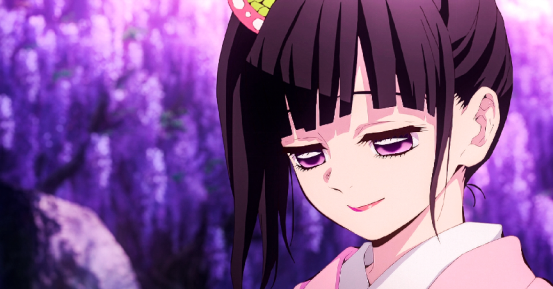
Kanao Tsuyuri’s journey is one of the most heart-wrenching and inspiring in the series. She begins as a silent, empty shell of a person, a direct result of horrific abuse. Her transformation into a powerful and decisive Demon Slayer is a slow, poignant process of reclaiming her own will and emotions.
A Childhood Shattered by Abuse
Kanao’s early life was a nightmare of poverty and extreme violence. Her parents subjected her and her siblings to constant beatings and starvation. This relentless abuse was so severe that it broke her spirit, causing her to develop a defense mechanism where she completely shut down her emotions. For Kanao, feeling anything meant unbearable pain, so she ceased to feel at all. This emotional emptiness was her only means of survival. The trauma culminated in her being sold into slavery, a moment that cemented her view of herself as an object with no intrinsic value or autonomy. She was a hollow doll, unable to make decisions, think for herself, or even cry.
Salvation and a New Beginning with the Kocho Sisters
Her life took a dramatic turn when she was found by Shinobu and Kanae Kocho. Seeing the rope around her neck and her vacant eyes, the sisters rescued her, buying her from her captor and bringing her to the Butterfly Mansion. While Kanae was warm and optimistic about Kanao’s recovery, Shinobu was initially more skeptical. Despite their differing approaches, they provided Kanao with a safe home, food, and care. They gave her a new name, Kanao Tsuyuri, and officially adopted her. However, the psychological damage was so profound that Kanao remained unable to function independently. She would not eat unless told to, would not speak unless spoken to, and showed no initiative whatsoever.
The Coin Toss: A Crutch for Reclaiming Will
To help Kanao navigate the world, Kanae gave her a coin, instructing her to flip it whenever she was unsure of what to do. This simple tool became Kanao’s lifeline. While it may seem like a way to avoid making decisions, it was actually the first step toward rebuilding her autonomy. The coin allowed her to perform actions and engage with the world without the paralyzing fear of making the “wrong” choice. It was a temporary bridge that helped her function while her inner self slowly began to heal. Her fateful encounter with Tanjiro Kamado, who encouraged her to listen to her own heart, was a pivotal moment. He challenged her reliance on the coin, telling her, “The heart is what drives people,” which planted a seed of change that would later blossom.
Mastering Flower Breathing and Becoming a Tsuguko
Despite her emotional struggles, Kanao possessed immense natural talent as a warrior. She learned Flower Breathing (Hana no kokyū) simply by observing Kanae and Shinobu. Her physical abilities, particularly her eyesight, were extraordinary. She eventually became the Tsuguko (successor) to Shinobu, a testament to her skill and potential as a future Hashira. Her fighting style is a beautiful yet deadly combination of grace and precision, mirroring the duality of the Butterfly Mansion itself—a place of healing that also trains lethal demon slayers. Her growth as a slayer ran parallel to her emotional reawakening; as she grew stronger in battle, she also grew more capable of feeling and expressing herself.

Zenitsu Agatsuma: The Coward Who Contained a Lightning God
Zenitsu Agatsuma is introduced as a character defined by his overwhelming fear and low self-esteem. He cries, screams, and runs from danger at every opportunity. Yet, hidden beneath this cowardly exterior is a prodigious talent and a fiercely loyal heart, making his journey one of conquering his inner demons as much as the external ones.
An Orphan’s Life and Crippling Self-Doubt
Zenitsu’s past is marked by loneliness and betrayal. As an orphan, he was desperate for kindness and easily manipulated. A woman he loved tricked him into taking on a massive debt, which was then paid off by the former Thunder Hashira, Jigoro Kuwajima. Jigoro saw potential in Zenitsu and took him on as his student. However, Zenitsu’s training was brutal and unforgiving. He constantly tried to escape, convinced he was a worthless failure who would never live up to his master’s expectations. This deep-seated self-loathing became the core of his personality, fueling his constant anxiety and belief that he was destined to die a pathetic death.
The Unwavering Faith of a Master
Despite Zenitsu’s constant protests and attempts to flee, Jigoro never gave up on him. He subjected Zenitsu to rigorous, often painful, training, including being struck by lightning, which turned his hair from black to yellow. Jigoro’s tough love was a form of unwavering belief. He knew that Zenitsu had the potential to master Thunder Breathing (Kaminari no kokyū), even if Zenitsu himself couldn’t see it. This mentorship was the first time in Zenitsu’s life that someone had truly invested in him. The weight of his “Gramps’” expectations was both a source of pressure and a deep-seated motivation for Zenitsu to keep going, even when he wanted to give up.
Unconscious Power: Mastering the First Form
Zenitsu’s unique condition is the key to his power: when fear overwhelms him to the point of passing out, his subconscious takes over. In this state, he is a completely different person—a calm, swift, and deadly swordsman who has perfected the first form of Thunder Breathing, Thunderclap and Flash, to an extraordinary degree. This duality highlights his internal conflict; his conscious mind is paralyzed by fear, but his body and spirit, honed by Jigoro’s training, know exactly what to do. He executes his technique with blinding speed, often defeating demons before he even consciously registers the threat. This reliance on his unconscious power initially served as a crutch, but it was also the proof of the strength that lay dormant within him.
From Fear to Fortitude: The Conscious Warrior
Zenitsu’s true growth occurs when he begins to fight while awake. This shift is driven by his desire to protect his friends, particularly Nezuko Kamado. His loyalty and affection for his comrades become a force stronger than his fear. During the battle against his former senior, Kaigaku, who had become a demon, Zenitsu is forced to confront his past and his perceived failures. In this climactic duel, he not only fights consciously but also unleashes a technique of his own creation: the Seventh Form: Honoikazuchi no Kami (Flaming Thunder God). This moment symbolizes his full transformation. He is no longer just the boy who can only do one thing; he is a warrior who has surpassed his master and forged his own path, proving that even the greatest coward can become a hero.

Inosuke Hashibira: The Wild Beast Who Learned to Be Human
Bursting onto the scene with explosive and chaotic energy, Inosuke Hashibira is a warrior raised in the wilderness. His character arc is a fascinating exploration of the journey from a primal, solitary existence to understanding complex human emotions like friendship, grief, and teamwork.
A Life Forged in the Law of the Jungle
Inosuke’s backstory is one of tragic isolation. As an infant, his mother, Kotoha, fled from an abusive husband and sought refuge in the cult of the Upper-Rank Two demon, Doma. When she discovered Doma was eating his followers, she fled with Inosuke but was cornered at a cliff. In a final act of desperation, she threw Inosuke into the river below before being devoured. Inosuke was found and raised by a wild boar. Growing up in the mountains, his only reality was the brutal law of nature: only the strong survive. This upbringing shaped him into a being of pure instinct, aggression, and pride. He developed his own fighting style, Beast Breathing (Kedamono no kokyū), through trial and error, and his primary motivation was to prove he was the strongest being in the forest.
The Collision with Humanity
Inosuke’s first significant contact with human society came when he encountered Demon Slayers and decided he wanted their Nichirin Blades. After stealing their swords and passing the Final Selection through sheer force, he met Tanjiro Kamado and Zenitsu Agatsuma. This meeting was a culture shock. Inosuke couldn’t comprehend Tanjiro’s kindness or Zenitsu’s cowardice. His initial interactions were based on challenges and fights, as this was the only way he knew how to relate to others. Tanjiro’s unwavering compassion and patience slowly began to break through Inosuke’s hardened, wild exterior.
Forging Bonds and Understanding Emotion
Traveling with Tanjiro and Zenitsu forced Inosuke to experience concepts that were completely foreign to him, such as camaraderie and mutual support. A key turning point was during the Mount Natagumo arc. After a brutal fight with the Father Spider Demon, Inosuke is left broken and ready to accept death. Tanjiro’s arrival and their subsequent teamwork taught him the value of fighting alongside others. Later, after the death of the Flame Hashira, Kyojuro Rengoku, Inosuke experiences a profound sense of loss and frustration for the first time. He shouts, “Don’t cry! Don’t feel pathetic!” while grappling with his own grief, a raw and powerful moment that shows him beginning to process complex human emotions. He learns that strength isn’t just about winning fights; it’s also about protecting others and cherishing the bonds you have.

Obanai Iguro: The Serpent’s Scars and a Purified Soul
The Serpent Hashira, Obanai Iguro, is initially portrayed as a harsh, strict, and somewhat cruel individual. However, his abrasive personality is a shield forged by one of the most horrific backstories in the series, hiding a deep-seated self-loathing and a desperate desire for purification.
A Cursed Birth in a Vile Clan
Obanai was born into a clan of women who worshiped a serpentine demon. For 370 years, his clan had sacrificed newborn babies to this demon in exchange for the riches it stole from its victims. Obanai was the first male born in centuries, and because of his unusual mismatched eyes, he was deemed special. He was kept locked in a wooden cage for the first twelve years of his life, catered to by his family but groomed for a singular purpose: to be a worthy sacrifice. The snake demon took a liking to him and demanded that his mouth be slit to resemble her own, an act his family willingly carried out. This upbringing instilled in him a profound sense of filth and a deep-seated hatred for his own bloodline.
The Burden of Survival and Filthy Blood
Terrified, Obanai managed to escape his cage, but the serpent demon gave chase. He was saved at the last moment by the Flame Hashira at the time, but his escape led to the demon slaughtering his entire clan of fifty people in a rage. The only survivor, a cousin, blamed Obanai for their deaths. This immense guilt, combined with the trauma of his upbringing, created Obanai’s core belief: that he and his blood were “filthy” and unworthy. He joined the Demon Slayer Corps and dedicated himself to killing demons with a ruthless fervor, believing that only by ridding the world of evil could he hope to one day purify his own soul.
Finding Light in Mitsuri Kanroji
The one source of light in Obanai’s dark world was the Love Hashira, Mitsuri Kanroji. He fell in love with her at first sight, captivated by her cheerful and genuine nature. However, his feelings of unworthiness prevented him from ever confessing his love. He felt he couldn’t stand by her side until he had cleansed his “filthy blood.” His affection manifested in small acts, like gifting her the green socks she always wears. His bond with Mitsuri became his primary motivation, a hope for a future where he could be reborn into a world without demons and be worthy of her. This unspoken love fueled his determination during the final, desperate battles against Muzan and the Upper Ranks.

The Common Thread: How Trauma Forged Unbreakable Strength
The stories of Kanao, Zenitsu, Inosuke, and Obanai, while unique, are woven together by a common thread: the transformative power of adversity. Their pasts did not simply create obstacles to be overcome; they actively shaped the very skills and psychological traits that made them such effective Demon Slayers.
From Pain to Power
Each character’s greatest strength is directly linked to their deepest trauma.
- Kanao’s emotional detachment, a result of abuse, allowed her to maintain a calm and focused demeanor in battle, while her extraordinary eyesight was honed as a survival mechanism to constantly watch for danger.
- Zenitsu’s crippling fear heightened his senses, particularly his hearing, to a superhuman level, allowing him to detect demons and perceive threats others could not. His subconscious fighting style was born from his mind’s need to escape that fear.
- Inosuke’s feral upbringing gave him an unpredictable, animalistic fighting style and a hyper-flexible body, making him an incredibly difficult opponent for demons to read. His sense of touch allowed him to feel vibrations in the air and ground.
- Obanai’s life in darkness and his bond with his snake, Kaburamaru, allowed him to fight effectively even after being blinded, relying on his pet’s senses to navigate the battlefield and strike with uncanny precision.
The Importance of Found Family
A crucial element in their healing and growth was the intervention of others. None of these characters overcame their pasts alone. The Kocho sisters gave Kanao a home and a choice. Jigoro gave Zenitsu purpose and belief. Tanjiro gave Inosuke friendship and emotional understanding. And Mitsuri gave Obanai a reason to hope for a better future. These relationships provided the support system necessary for them to channel their pain into a protective, heroic purpose, demonstrating that community and connection are essential for healing deep psychological wounds.
Conclusion: The Mark of a True Hero
The journeys of Kanao, Zenitsu, Inosuke, and Obanai are a powerful reminder that the most compelling heroes are often the most deeply flawed and wounded. Their stories elevate *Demon Slayer* from a simple tale of good versus evil into a profound exploration of human resilience. They teach us that strength is not about being unbreakable, but about the courage to piece oneself back together after being shattered. Their scars, both visible and invisible, are not marks of weakness, but symbols of the incredible battles they have won—not just against demons, but against the ghosts of their own pasts.
Frequently Asked Questions (FAQ)
- What is the significance of Kanao’s coin?
- Kanao’s coin, given to her by Kanae Kocho, was a tool to help her make decisions when her trauma left her unable to think for herself. It served as a bridge to autonomy, allowing her to function while she slowly healed. Tanjiro later challenged her reliance on it, encouraging her to listen to her own heart, which was a major catalyst in her emotional development and journey to reclaiming her will.
- Why is Zenitsu only powerful when he is asleep or unconscious?
- Zenitsu’s power manifests when he’s unconscious because his conscious mind is paralyzed by extreme fear and self-doubt. When he passes out, his subconscious—which has perfectly absorbed his master’s rigorous training—takes over. In this state, he is free from fear and can execute his Thunder Breathing techniques with flawless precision and speed. His growth as a character is marked by his increasing ability to fight while conscious.
- How did Inosuke develop his unique Beast Breathing technique?
- Inosuke created Beast Breathing himself while living in the mountains. Having been raised by wild boars, he developed a fighting style that mimicked the movements, instincts, and predatory nature of animals. It is a self-taught, primal style characterized by unpredictable attacks, the use of two serrated swords, and enhanced senses, particularly his sense of touch, which allows him to detect subtle changes in his environment.
- What is the origin of Obanai Iguro’s bandages and mismatched eyes?
- Obanai Iguro’s bandages cover his mouth, which was forcibly cut from ear to ear as a child to resemble the serpent demon his clan worshiped. He was born with heterochromia, having one turquoise and one yellow eye, which his clan considered special. He keeps his mouth covered due to the trauma and shame associated with his past and his “filthy bloodline.”

Related Posts